The Architecture of the Hippodrome London: A Listed Casino Building
Standing at the pulsing heart of Leicester Square, the London Hippodrome is far more than a modern casino; it’s a palimpsest of British entertainment history etched in stone, steel, and spectacle. This Grade II listed building, a cornerstone of the Leicester Square Conservation Area, represents a unique strand of UK heritage architecture. Its journey from Edwardian circus to legendary nightclub and now to a premier gaming destination encapsulates over a century of evolving leisure tastes, all within one of the most ingenious theatrical structures ever conceived.
From Hippodrome to Casino: A Building of Many Lives
The story of the Hippodrome is a narrative of audacious reinvention, a testament to its robust and flexible architecture. It has continually morphed to meet the demands of each new era, ensuring its survival where many contemporaries have fallen. This adaptive reuse is a masterclass in preserving architectural fabric by injecting it with new, relevant purpose.
The Matcham Masterpiece (1900)
Opened on 15 January 1900, the Hippodrome was conceived by impresario Edward Moss as a venue for circus and variety theatre. The commission went to the preeminent theatre architect of the age, Frank Matcham. His challenge was to create a space capable of housing equestrian acts, aquatic spectacles, and theatrical performances under one roof—a truly multi-functional entertainment complex for the Edwardian age. The building’s very name, derived from the Greek for “horse course,” signalled its ambitious, multi-disciplinary origins.
The Nightclub Era
By the late 1950s, tastes had shifted. The building was radically remodelled, reopening in 1958 as the Talk of the Town, a lavish dinner-and-show nightclub that became a cultural institution. For decades, it hosted the world’s biggest stars, from Shirley Bassey to Frank Sinatra, its stage witnessing the transition from variety to modern cabaret and pop. This chapter cemented its reputation as a premier nightlife destination, a role that would inform its future. The interior was transformed into a more intimate, cabaret-style setting, though many of Matcham’s core structural elements remained hidden beneath new layers of post-war glamour.
The 21st Century Casino Reinvention
The building’s most profound transformation began in 2009. Acquired by entrepreneur Simon Thomas, the project to convert it into the Hippodrome Casino was led by architect Damian Lishinto. The £40 million restoration and conversion, which opened in 2012, was a masterclass in sensitive adaptation. It required navigating the strict requirements of its listed status while inserting a modern, multi-level casino, bars, and restaurants, ultimately reviving Matcham’s original vision of a bustling, multi-faceted entertainment hub. This phase was less a demolition and more an archaeological uncovering, peeling back the 20th-century modifications to celebrate the Matcham skeleton beneath.
Frank Matcham’s Edwardian Extravagance
The genius of Frank Matcham is the Hippodrome’s foundational layer. His design was a bold fusion of exuberant style and groundbreaking engineering, created to deliver unparalleled spectacle. Matcham, responsible for over 150 theatres, was at the peak of his powers, and the Hippodrome represented one of his most technically ambitious projects.
Façade and Form
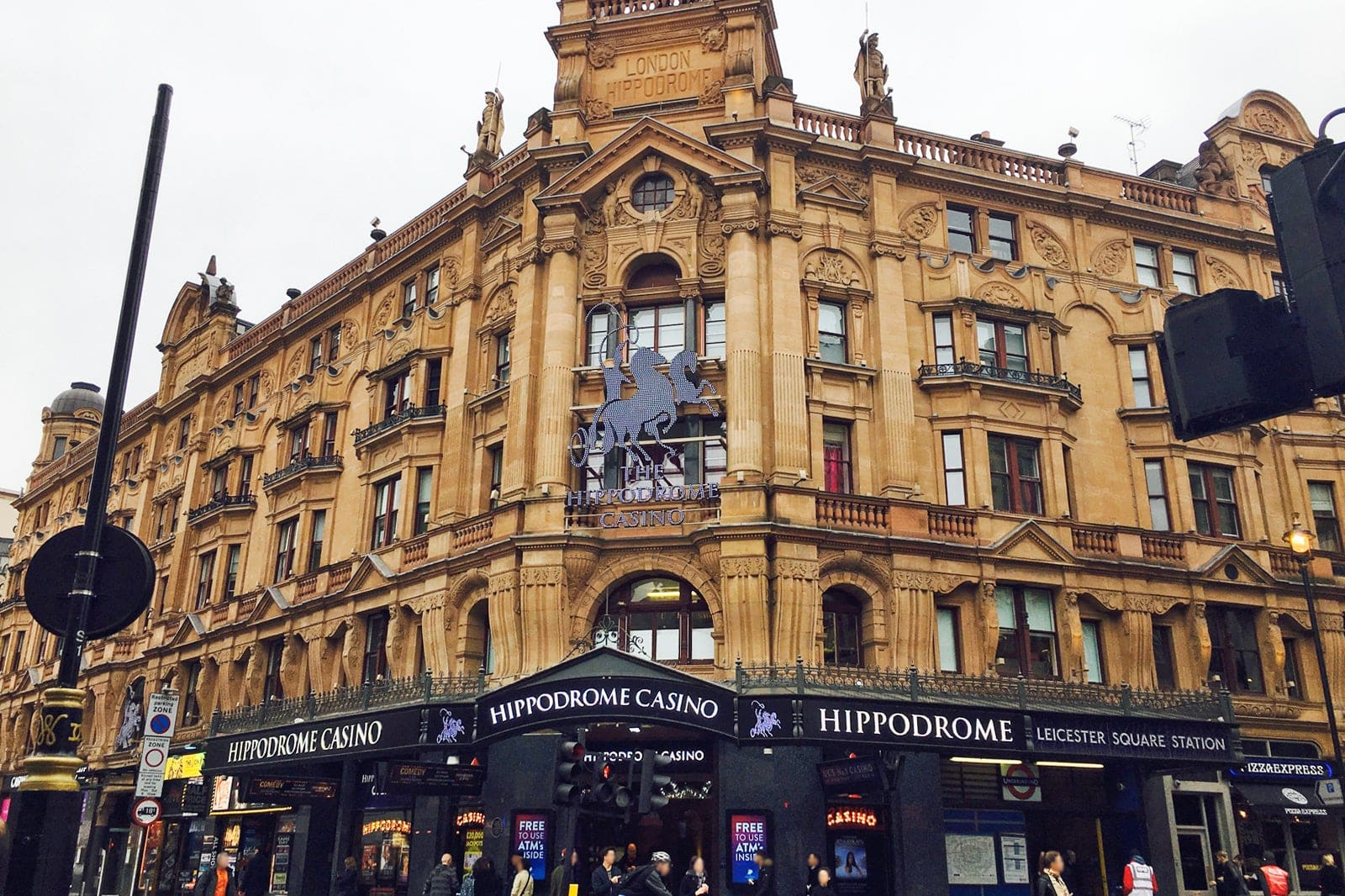
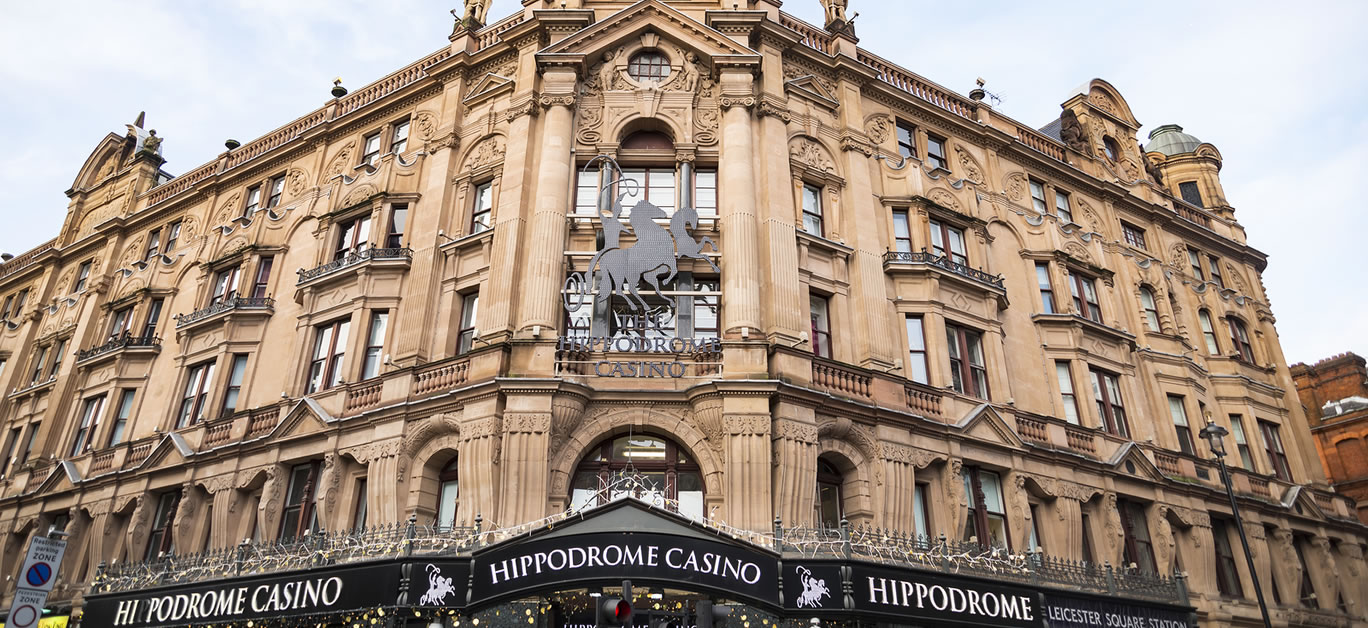
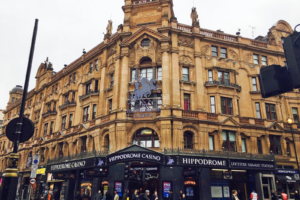
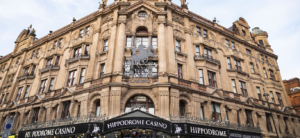
The exterior is a flamboyant example of Edwardian Baroque, a style Matcham employed with theatrical flair. The Charing Cross Road façade is a symphony of red brick, Portland stone, and terracotta, adorned with sculpted figures of horses, sea monsters, and comedy and tragedy masks—a direct reference to the building’s original circus and aquatic purposes. Its domed corner tower remains a distinctive landmark in the London streetscape, announcing the building’s special character within the urban fabric. The elaborate ornamentation was not merely decorative; it served as a billboard, narrating the wonders to be found inside to the passing crowds of Leicester Square.
Engineering for Spectacle
Matcham’s true innovation lay inside. To accommodate a circus ring that could flood for aquatic shows, he installed a vast 100,000-gallon water tank beneath the stage, complete with a hydraulic lift. The auditorium was a marvel of its time, featuring a cantilevered steel frame that eliminated the need for view-obstructing pillars. This created a series of stacked balconies and boxes that offered intimate, clear views from every seat, a configuration that perfectly suits its current use as a casino floor and intimate theatre. The architecture was, from its inception, engineered for immersive spectacle, with sophisticated ventilation and lighting systems that were cutting-edge for 1900.
Inside a Listed Casino: Blending Heritage with Modern Play
Operating a 21st-century casino within a Grade II listed Frank Matcham theatre is an exercise in architectural diplomacy. The building’s status, overseen by Historic England, ensures its historical and architectural significance is protected, guiding every change. The result is a seamless dialogue between centuries.
The Constraints and Charm of Listed Status
Listed building consent governs any alteration, requiring a symbiotic relationship between old and new. Damian Lishinto’s design had to work within these constraints, preserving key historic features while introducing contemporary life. This has resulted in a unique environment where patrons can:
- Play roulette under the ornate, original proscenium arch.
- Dine in the former orchestra pit, now the Lola’s Underground bar.
- Ascend the grand, restored staircases past gilded plasterwork to modern gaming salons.
- Watch a show in the beautifully restored Matcham Room, the original lower balcony.
The preservation extends to details like original fireplaces, decorative ironwork, and even surviving backstage graffiti, all integrated into the new layout.
A Multi-Level Entertainment Hub
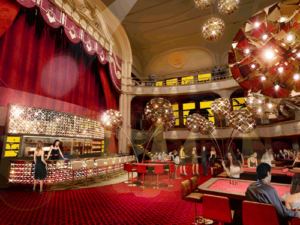
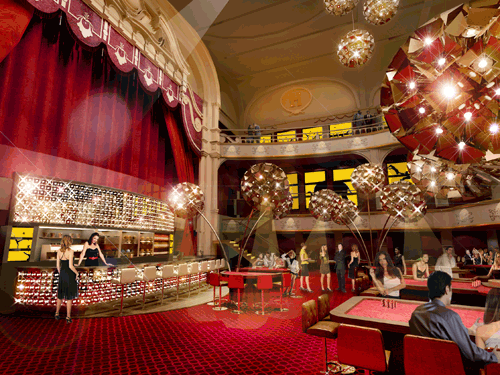
True to its original ethos, the Hippodrome Casino today is a vertical hive of activity. The main casino floor occupies the old auditorium space; the former stage is now the Heliot Steak House. The original backstage areas and dressing rooms have been transformed into additional bars and a poker room. This layered use demonstrates how a historic building can remain dynamic, its every nook and cranny repurposed yet respecting the ghosts of performances past. The circulation flows that once moved performers and animals now guide guests through a multi-sensory experience of gaming, dining, and live performance.
The Hippodrome in the Context of London’s Casino Architecture
London’s casino architecture is predominantly one of adaptation, often set within the opulent shells of former aristocratic mansions or luxury hotels. The Hippodrome stands apart as a purpose-built theatre of spectacle. Contrast it with:
- The Palm Beach Casino in Mayfair: Housed in the former Mayfair Hotel, its architecture speaks of 1920s hotel luxury—refined, residential, and discreet.
- The Ritz Club: Located in the basement of The Ritz Hotel, it epitomises Beaux-Arts elegance and secluded, members-only grandeur.
- The Empire in Leicester Square: A nearby competitor also in a converted theatre, yet its interior treatment is more uniformly modern, lacking the layered historical narrative of the Hippodrome.
While these venues offer a clubland atmosphere, the Hippodrome’s DNA is fundamentally public and theatrical. Its grandeur was designed to wow the masses, not just a privileged few. This unique origin story, from popular circus to accessible casino, makes it a unparalleled piece of European casino heritage, where the energy of the crowd is part of the architectural experience.
Why the Hippodrome’s Heritage Matters
The Hippodrome’s significance transcends its architectural beauty. It matters because it is a working, accessible chronicle of social history. It physically charts the trajectory of British popular entertainment, from animal acts and water ballets through the big band era and the dawn of television (the Talk of the Town was a frequent broadcast venue) to today’s gaming leisure. Its location within the Leicester Square Conservation Area underscores its role as a key contributor to the historic character of London’s Theatreland. Crucially, it is not a museum piece but a living, breathing building. Its continued commercial viability, under the stewardship of owners who value its past, is the very reason this Matcham masterpiece has been so meticulously preserved and can be experienced by everyone. It stands as a powerful argument that the best way to save a building is to keep it economically relevant and publicly loved.
Ultimately, the Hippodrome’s enduring magic lies in its architectural alchemy, where Frank Matcham’s vision, the spirit of the West End, and contemporary life are perpetually dealt into the same hand. It is a listed building that refuses to live in the past, instead using its history as the ultimate foundation for its future.